What to Eat Before a Half Marathon: A Practical Race-Morning Guide
Plan a familiar pre-half-marathon meal, choose comfortable timing, practise fueling on long runs, and avoid common race-morning stomach problems.
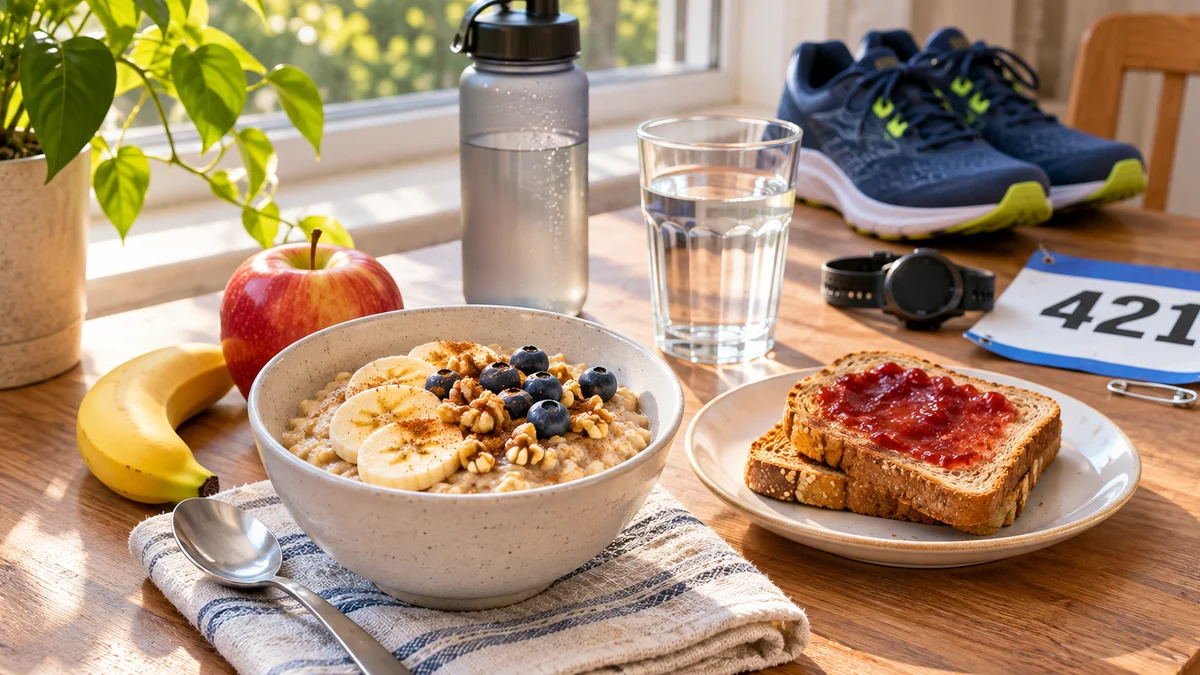
The best breakfast before a half marathon is rarely the most elaborate one. It is the food you can digest comfortably, eat early enough, and trust because you have already tried it before a longer run. An unfamiliar restaurant breakfast or a last-minute supplement might sound like a performance upgrade; it can also make a stressful race morning more complicated.
A half marathon covers 21.0975 kilometres (13.1 miles), and many runners will be moving for long enough that eating and drinking deserve some planning. But there is no universal menu that works for every athlete. Your start time, expected duration, appetite, gastrointestinal tolerance, weather, and individual health needs all matter.
This guide focuses on what to eat before the start—not on promising a particular performance or prescribing a diet. For pacing and fueling during the race, see our Half Marathon Pacing and Fueling guide.
Start with the purpose of your pre-race meal
A practical pre-race meal has three jobs: contribute readily available energy, help you begin reasonably hydrated, and avoid unnecessary stomach discomfort. Carbohydrate-rich foods are commonly used because carbohydrate is an important fuel for endurance exercise. The exact amount a runner needs depends on circumstances, rather than on a single perfect breakfast formula.
Official sports-nutrition guidance commonly recommends a larger carbohydrate-rich meal roughly two to four hours before longer competition, with smaller, familiar snacks closer to the start if needed and tolerated. The USADA nutrition guide gives examples and timing considerations, while the Victorian Better Health Channel explains why a familiar, carbohydrate-focused pre-event meal can be helpful.
What this does not mean: You must eat a particular number of grams, finish an enormous plate, or copy an elite runner’s routine. If you have a medical condition, digestive disorder, food allergy, or specific dietary needs, seek individual advice from an appropriately qualified professional.
A simple timing framework
Think of race-morning food in terms of how much time you have to digest it. The following examples are options to test in training, not fixed instructions.
| Time before the start | Possible approach | What to consider |
|---|---|---|
| About 3–4 hours | A familiar, reasonably substantial breakfast | More time for digestion; useful if the start is later |
| About 2–3 hours | A smaller familiar breakfast | Often practical for early-morning races |
| About 60–90 minutes | A small snack if you’re hungry and know it agrees with you | Less time for digestion; avoid experimenting |
| Last 30 minutes | Usually keep any intake small and familiar | Some runners prefer no additional solid food |
An early start might make a three-hour breakfast inconvenient. You can practise a different arrangement—for example, eating a smaller meal when you wake and using a snack you’ve already tolerated. A plan you can repeat matters more than an ideal-looking clock schedule.
What foods are worth testing?
There is no single “half-marathon breakfast.” These are ordinary food combinations that some runners find convenient:
- Porridge or oatmeal with banana: Familiar, portionable, and easy to prepare; use the amount and toppings you already tolerate.
- Toast or a bagel with jam or honey: A simple option when you prefer lighter textures.
- Breakfast cereal with milk or an alternative you tolerate: Easy to measure and familiar to many runners.
- Rice or potatoes with a modest familiar accompaniment: Useful if your normal breakfast is savoury rather than sweet.
- Fruit plus a small familiar snack: Sometimes easier when a very early start makes a full breakfast unappealing.
Foods are not automatically “good” or “bad.” A banana may work wonderfully for one runner and feel uncomfortable for another. Oatmeal provides fibre, which some runners tolerate well and others prefer to reduce close to racing. The goal is your tested combination, not the most photogenic meal.
What about protein, fat and fibre?
These nutrients are important across a normal diet. Immediately before a race, however, a large portion of high-fat or very high-fibre food may slow digestion or aggravate gastrointestinal symptoms for some people. That is why general pre-event guidance often emphasises carbohydrate and familiar foods with moderate amounts of other nutrients.
Do not eliminate entire food groups indefinitely just because you saw a race-morning recommendation. A temporary change in your pre-event meal is different from an ongoing restrictive diet. If you have a history of disordered eating or anxiety around food, avoid rigid fueling rules and seek appropriate support.
Example: An 8:00 a.m. half-marathon start
Imagine your race starts at 8:00 a.m. and your usual breakfast is comfortable about two and a half hours before running. A practice schedule might be:
| Approximate time | Example action | Reason |
|---|---|---|
| 5:15 a.m. | Wake, check how you feel, sip water as usual | Allow time for normal routine |
| 5:30 a.m. | Eat your already-tested breakfast | Leave a digestive window |
| 6:00–7:30 a.m. | Travel, collect your bib, use the toilet, prepare calmly | Reduce last-minute rushing |
| 7:15 a.m. | Optional small familiar snack if your training has shown it helps | Avoid unnecessary hunger without experimenting |
| 8:00 a.m. | Start at a controlled effort | Your breakfast is only one part of race preparation |
This is not a schedule that everyone must copy. If you usually eat one hour before training with no discomfort, a different plan may be reasonable. If the race starts much earlier, you might move part of the preparation to the night before rather than sacrificing all your sleep.
How much water should you drink before the race?
Begin with normal, sensible hydration. Drink with your meal and use thirst and your usual routine as practical guides. It is rarely helpful to force large amounts of water immediately before the gun: doing so can cause discomfort and, in extreme circumstances, contribute to dangerous overhydration.
Heat, duration, sweat losses, medications and medical conditions can all influence fluid needs. The Better Health Channel discusses general pre-event hydration. If you need a tailored hydration strategy—particularly with a relevant medical condition—speak with a sports dietitian or other qualified clinician.
During-race fueling is a different decision. If you expect to be running for a considerable time, practise any sports drink, gel, or other fuel during suitable long training runs rather than first using it on race day. Our half-marathon fueling and pacing article explores that separate topic.
Practise the whole routine on two long-run mornings
The simplest way to choose your breakfast is to rehearse it. Pick two appropriate long-run sessions and note more than just the food:
- Timing: When did you wake, eat and start moving?
- Amount: Did the portion leave you comfortable or too full?
- Symptoms: Any reflux, cramps, nausea or unexpected urgency?
- Conditions: Was it unusually hot, humid or stressful?
- Energy: Did you feel ready to run at your intended easy effort?
- Convenience: Could you prepare the same food at a hotel or before travelling?
Change one thing at a time. If toast and a banana feel fine, there may be no reason to add a new bar, gel and coffee on the same morning. A practical note in your phone is enough; you don’t need a complicated spreadsheet.
One poor trial isn’t definitive. Symptoms can reflect sleep, nerves, pace, weather, illness and many other factors. Repeated or severe digestive symptoms deserve professional advice rather than a cycle of increasingly restrictive experiments.
Five race-morning mistakes to avoid
1. Trying something completely new
An unfamiliar supplement, very large breakfast, or new caffeinated drink may introduce uncertainty exactly when you want predictability. Use your practice runs as the testing ground.
2. Skipping food because you feel nervous—without a plan
Some people struggle to eat early. Rather than assuming you’ll manage somehow, practise a smaller meal, an earlier waking time, or a food texture you tolerate. Seek individual nutrition guidance if eating is regularly difficult.
3. Eating a giant meal minutes before the start
A heavy breakfast with little time to digest can leave you uncomfortable. Consider moving the main meal earlier or using an appropriately sized familiar option.
4. Drinking excessive amounts to “bank” hydration
More fluid is not always safer or more effective. Avoid trying to compensate for poor planning with a large last-minute bottle. Use a realistic hydration plan and know where the course aid stations are.
5. Forgetting the practical situation
A hotel buffet may open too late; transport may take longer than expected; a start area may have toilet queues. Bring an approved, portable backup snack that you know you tolerate and review event rules for carrying food.
If your half marathon starts at a different time
Very early race: A small practised breakfast and preparation the night before may be more realistic than waking in the middle of the night for a huge meal. Choose what has actually worked for you.
Late-morning race: You may have enough time for your normal breakfast and, if needed, a small later snack. Avoid grazing continually because you’re nervous.
Afternoon race: Keep your ordinary meal schedule as appropriate, with enough space between the last substantial meal and the start. Do not assume you need to fast all morning.
Travel race: Check the accommodation, shopping options, food storage, and start-area rules before leaving home. Familiarity is valuable even when the venue is unfamiliar.
How your eating plan relates to your race goal
A runner expecting to finish near 90 minutes and one expecting to be on the course for three hours may have different during-race considerations. So will a runner facing a hot, exposed course rather than a cool one. Your pre-race breakfast is part of that wider preparation, not a guarantee that you can sustain a specific pace.
If you’re still deciding how fast to run, use CalcStudio’s Pace Calculator or read How to Choose Your First Half Marathon Goal Time. Treat any goal as an estimate grounded in recent training rather than a promise based on your meal.
Frequently asked questions
Should I eat pasta the night before?
Pasta can be a familiar carbohydrate-rich dinner, but it is not mandatory. You can use other foods you normally tolerate. A very large unfamiliar meal may be less helpful than your ordinary balanced dinner and adequate overall preparation.
Is coffee okay before a half marathon?
If you already drink coffee and tolerate it before running, keeping your normal routine may be reasonable. Do not introduce high doses of caffeine or supplements just before a race; caffeine can affect sleep, anxiety, digestion and certain medical conditions.
What if I have a sensitive stomach?
Practise food choice, portion size and timing during training, avoid known triggers, and seek medical or dietitian support for recurring symptoms. General internet advice cannot diagnose the cause.
Should I eat during the race as well?
That depends on expected duration and individual needs. For longer events, carbohydrate during exercise can be relevant, but practise the strategy in training and review a credible sports-nutrition resource rather than improvising at the start line.
What if I cannot eat early in the morning?
Try a smaller, familiar option during a training rehearsal. You may also need to adapt your wake-up and travel timing. If you’re unable to eat or drink enough for safe exercise, getting personalized advice is sensible.
A final checklist for the day before
- I know the race start time and how long it takes to arrive.
- My breakfast is familiar and has been tested before a long run.
- I have a realistic schedule for waking and eating.
- I know what food and fluid will be available along the course.
- I’m not introducing a new supplement or overly complicated routine.
- I know that discomfort or concerning symptoms are reasons to adapt or stop.
A successful pre-half-marathon breakfast is predictable, comfortable and practical—not perfect. Fueling matters, but so do training consistency, rest, weather, effort and sensible decisions on the day.
Further reading
- USADA — Nutrition Guide: Fueling for Performance
- Better Health Channel — Sporting Performance and Food
- CalcStudio — Half Marathon Pacing and Fueling
Educational information only. This is not a prescribed diet or individualized medical advice. Runners with health conditions, food allergies, digestive disorders, or other special needs should seek qualified advice.